Home
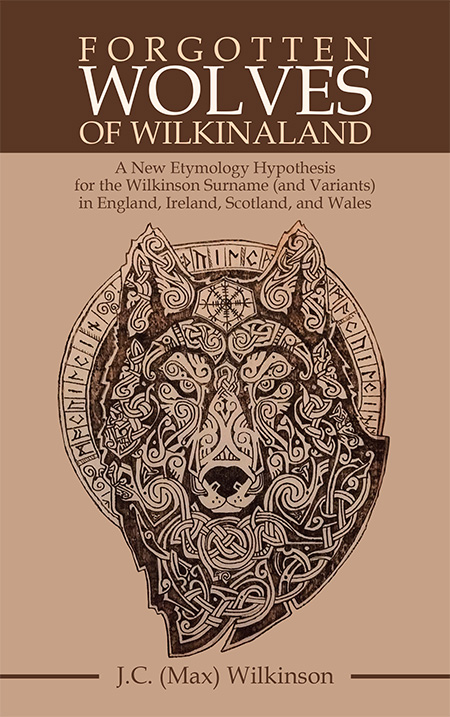 Forgotten Wolves of Wilkinaland
A New Etymology Hypothesis for the Wilkinson Surname (and Variants) in England, Ireland, Scotland, and Wales
The fetters will burst, and the wolf run free …
After the wolf do wild men follow …
There hangs a wolf by the western door,
And o’er it an eagle hovers …
Go forth like a wolf on thy way …
A gray wolf had they within their hall …
… it is well if a howling wolf
Thou hearest under the ash …
The word of the race of wolves …
Often a wolf in a son there is.
—The Poetic Edda, passim
Man må hyle med de ulve man er I blandt.
(One must howl with the wolves one is among.)
—Danish proverb
If you are reading this, and your last name begins with “Wilk” and you derived your surname from someone of English, Irish, or Scottish descent, you almost certainly have an inaccurate understanding of both the meaning and source of your surname. Whatever your genetic lineage may be, the linguistic taproot of the surname you carry, in my opinion at any rate, is most likely the ancient Slavonic word “wilk,” which means “wolf,” and came to the British Isles and Ireland among Frisians and Danes during both the Anglo-Saxon migration and Viking invasion eras. It is essentially a linguistic artifact that remained in use as a given name, long after its meaning was forgotten, from the assimilation of the Polabian Slavic tribe of the Wilte or Wylte/Weleti (or Wilzi) into the Danish and Frisian populations some fifteen hundred years ago.
ORDER A COPY NOW! READ MORE
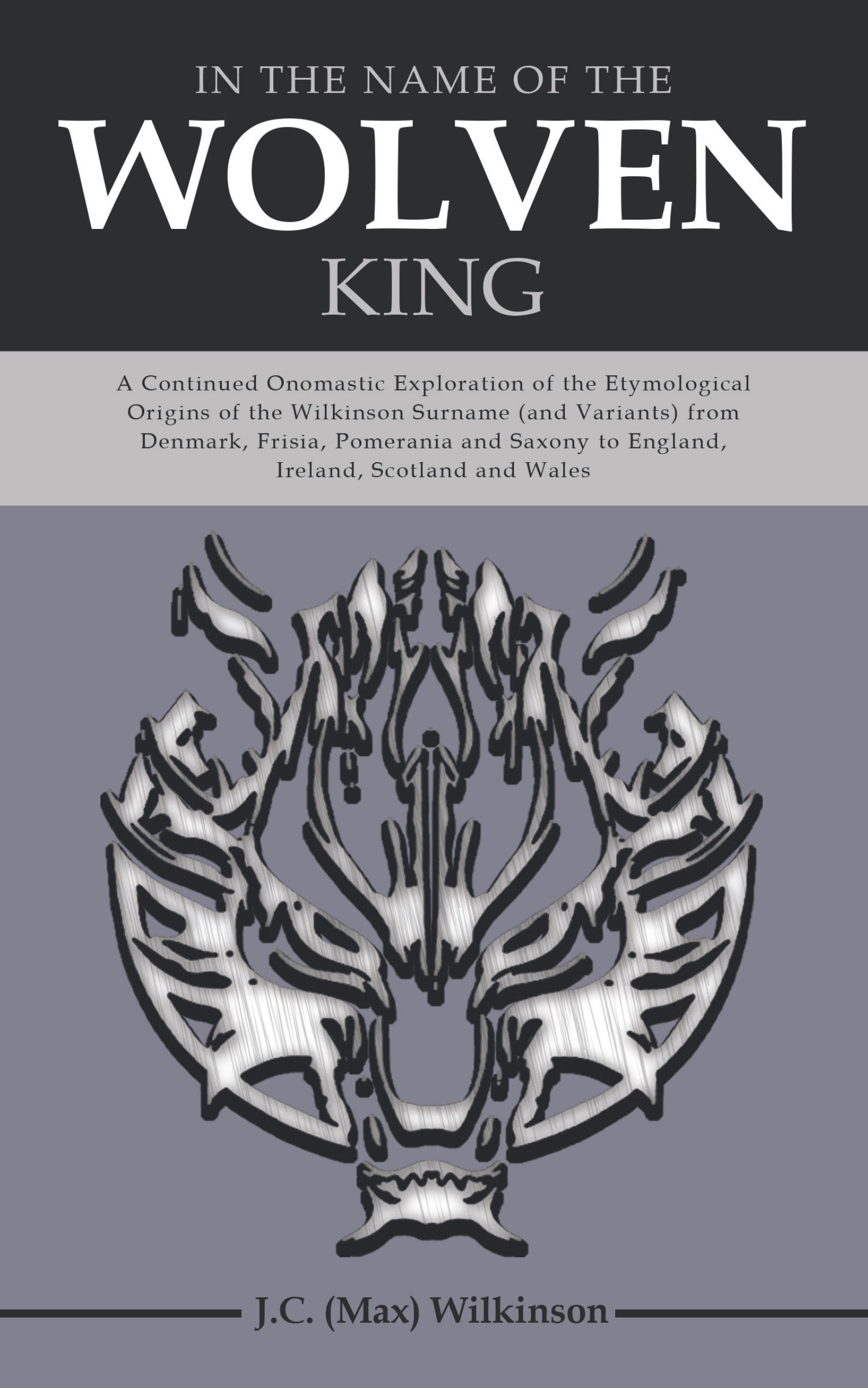
In the Name of the Wolven King:
A Continued Onomastic Exploration of the Etymological Origins of the Wilkinson Surname (and Variants) from Denmark, Frisia, Pomerania and Saxony to England, Ireland, Scotland and Wales
This book provides new historical and ethno-linguistic evidence powerfully confirming the author’s provocative thesis, first presented in Forgotten Wolves of Wilkinaland (Archway, 2020), about the etymology of his family surname. A long hidden story, it is now revealed in the medieval Baltic region’s tense history between the Angles, Danes, Frisians, and Saxons and their sometime allies, sometime foes— the Slavic Wends (aka Polabian Slavs). The origin of the Wilk-root personal and surnames resides in Germano-Norse borrowings of long-forgotten Slavic naming analogs for Germanic “Wulf” and Norse “Ulf.” Variants of this Slavic name were once popular in late medieval literature, memorialized in mytho-saga figures like King Hertnid’s adversary, King Wilkinus, in the Thidrekssaga; or Wilken the giant killer in the Langbeen Riser ballad. These Slavic naming conventions persisted among the Germanic and Norse tribes well after the Wends were assimilated. Indeed, continuing well past any conscious memory survived that the source of such names was the Slavic word “wilk” (and variants) meaning “wolf.” This research is essential to understand the origin of the Wilk-root surnames in England, Ireland, Scotland, and Wales. Families such as Wilkas, Wilkes, Wilkens, Wilkersons, Wilkies, and Wilkinsons; MacUilcins, McQuilkins, and McCoullichans, etc., are figuratively the distant heirs of a long-forgotten, semi-legendary monarch named – Wilkinus – The Wolven King.
ORDER A COPY NOW! READ MORE


Home
A New Etymology Hypothesis for the Wilkinson Surname (and Variants) in England, Ireland, Scotland, and Wales
The fetters will burst, and the wolf run free …
After the wolf do wild men follow …
There hangs a wolf by the western door,
And o’er it an eagle hovers …
Go forth like a wolf on thy way …
A gray wolf had they within their hall …
… it is well if a howling wolf
Thou hearest under the ash …
The word of the race of wolves …
Often a wolf in a son there is.
—The Poetic Edda, passim
Man må hyle med de ulve man er I blandt.
(One must howl with the wolves one is among.)
—Danish proverb
If you are reading this, and your last name begins with “Wilk” and you derived your surname from someone of English, Irish, or Scottish descent, you almost certainly have an inaccurate understanding of both the meaning and source of your surname. Whatever your genetic lineage may be, the linguistic taproot of the surname you carry, in my opinion at any rate, is most likely the ancient Slavonic word “wilk,” which means “wolf,” and came to the British Isles and Ireland among Frisians and Danes during both the Anglo-Saxon migration and Viking invasion eras. It is essentially a linguistic artifact that remained in use as a given name, long after its meaning was forgotten, from the assimilation of the Polabian Slavic tribe of the Wilte or Wylte/Weleti (or Wilzi) into the Danish and Frisian populations some fifteen hundred years ago.
ORDER A COPY NOW! READ MORE
In the Name of the Wolven King:
A Continued Onomastic Exploration of the Etymological Origins of the Wilkinson Surname (and Variants) from Denmark, Frisia, Pomerania and Saxony to England, Ireland, Scotland and Wales
This book provides new historical and ethno-linguistic evidence powerfully confirming the author’s provocative thesis, first presented in Forgotten Wolves of Wilkinaland (Archway, 2020), about the etymology of his family surname. A long hidden story, it is now revealed in the medieval Baltic region’s tense history between the Angles, Danes, Frisians, and Saxons and their sometime allies, sometime foes— the Slavic Wends (aka Polabian Slavs). The origin of the Wilk-root personal and surnames resides in Germano-Norse borrowings of long-forgotten Slavic naming analogs for Germanic “Wulf” and Norse “Ulf.” Variants of this Slavic name were once popular in late medieval literature, memorialized in mytho-saga figures like King Hertnid’s adversary, King Wilkinus, in the Thidrekssaga; or Wilken the giant killer in the Langbeen Riser ballad. These Slavic naming conventions persisted among the Germanic and Norse tribes well after the Wends were assimilated. Indeed, continuing well past any conscious memory survived that the source of such names was the Slavic word “wilk” (and variants) meaning “wolf.” This research is essential to understand the origin of the Wilk-root surnames in England, Ireland, Scotland, and Wales. Families such as Wilkas, Wilkes, Wilkens, Wilkersons, Wilkies, and Wilkinsons; MacUilcins, McQuilkins, and McCoullichans, etc., are figuratively the distant heirs of a long-forgotten, semi-legendary monarch named – Wilkinus – The Wolven King.
ORDER A COPY NOW! READ MORE